
- News
- Business News
- India Business News
- What the healthcare sector expects from Union budget 2022
Trending
This story is from January 27, 2022
What the healthcare sector expects from Union budget 2022
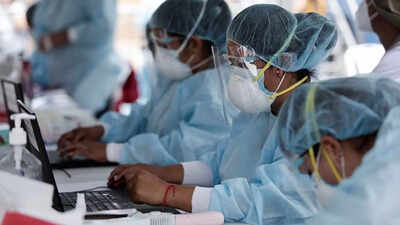
NEW DELHI: The Union budget 2022 is set to be presented on 1 February with different industries, individuals and others around the country anticipating changes in their respective areas. The healthcare sector will be one of the most critical sectors to be in focus this year.
The experts believe that the government, which had rightly placed health and well-being as the first of the six pillars in the Union budget 2021, is expected to continue the focus in 2022 as well.
Outlay for healthcare infra should be increased further
Since the hospital sector is at the forefront as Covid cases in India surge again, facilities in tier 2-3 towns need to be equipped with diagnosis centers, ventilators, ICUS, critical care facilities and oxygen plants, said Dr Ashutosh Raghuvanshi, managing director and CEO at Fortis Healthcare.
He also highlighted the fact that healthcare should be accorded priority status so that the sector can derive benefit from the GST transition and providers and healthcare service delivery institutions can avail loans at lower rates and extended tenure. "It is also essential that the government reduces duty and cess for critical care and life-saving equipment and drugs to reduce costs for both providers and patients."
Investment across all the segments required
As the sector is on its way to recovering from the setback of the pandemic, greater investment across all the segments will encourage organisations to expand their capacities, said V Ashok, CFO at ACG, one of the leading pharma manufacturers.
"Bringing in new investments, incentivizing & supporting existing organisations with forward-looking policies, deduction in duties and reducing GST will bring down the overall cost of healthcare services which will benefit a large section of people in the country and encourage organisations to invest more in R&D," said Ashok.
Considering, India is the largest exporter of pharma products, the government may look at providing appropriate RoDTEP rates to pharma products exported by the industry to encourage drug exports, he added.
Sector has not been able to derive benefits of GST transition
Dr Harsh Mahajan, president at the Healthcare Federation of India, believes the embedded taxes in the sector have increased in the post-GST regime compared to the pre-GST scenario. Therefore, it is vital to rationalise GST to unlock the embedded credit which is trapped in the healthcare value chain, he said.
Hoping govt to take some key fiscal steps
The Indian healthcare system has been dealing with its biggest challenge. In this context, Sanjay Vinayak, Founder and CEO at Connect and Heal, hopes that the government will take some key fiscal steps, beginning with simplification of GST conditions for all healthcare providers.
"Any organization delivering, facilitating, or coordinating healthcare services should be provided exemption from GST even if they are not clinical establishments themselves. Streamlining of these issues is critical for modern healthcare companies," he said.
Apart from this, the primary healthcare sector continues to suffer from financial challenges, Vinayak said, "There is a need to qualify primary healthcare credit as priority sector lending for Banks. This is essential as the private sector needs to invest heavily into building a robust infrastructure. Another important area to focus is lower tax regime for the healthcare sector to encourage capital inflow.
Indian pharma industry needs competitive advantage
The Indian pharma industry needs a competitive advantage to move up in the value chain and become a global leader in pharmaceuticals, said Hitesh Windlass, managing director of Windlass Biotech. This requires a push from the government to encourage indigenous manufacturers to do more R&D, especially in the areas of unmet need, and be able to invest in capacity building, he added.
Higher tax deductions for R&D expenses will encourage even more investment in the development of new pharmaceuticals, Windlass said.
"During the pandemic, India emerged as a leader in Covid-19 vaccine manufacturing and development because of years of efforts of our scientists and innovators in disease prevention. There is now a critical need for investment from govt in building infrastructure and adoption of digital technology to achieve its vision of self-reliance. With support from the Govt., India can emerge as an innovation hub in next five years," he said.
The focus on healthcare has been at unprecedented levels in the recent years
The increased allocation of funds in last year’s budget alongside the recent commitment of Rs 64,000 crores towards healthcare over the next five years is a testament to the government’s focus on strengthening the health infrastructure in the country, said country managing director of Boehringer Ingelheim India, Vani Manja. "I expect this will be reflected in the upcoming budget as well."
"What will be critical to ensure is not only increased expenditure towards healthcare but also a well-planned and balanced allocation coupled with a strong execution roadmap that addresses areas beyond Covid-19 to secure long-term sustainable impact. Specifically, the burden on the healthcare infrastructure caused by the increasing burden of NCDs should continue to be considered," she added.
"It would also be important to incentivize investments in Research and Development for India to become an attractive innovation hub and maximize access to innovation for patients in India,” Manja said.
The experts believe that the government, which had rightly placed health and well-being as the first of the six pillars in the Union budget 2021, is expected to continue the focus in 2022 as well.
Outlay for healthcare infra should be increased further
Since the hospital sector is at the forefront as Covid cases in India surge again, facilities in tier 2-3 towns need to be equipped with diagnosis centers, ventilators, ICUS, critical care facilities and oxygen plants, said Dr Ashutosh Raghuvanshi, managing director and CEO at Fortis Healthcare.
"There is an urgent need to allocate a separate budget for a national campaign around preventive health, testing and screening as these are key to reduce the overall disease burden in India," Raghuvanshi said.
He also highlighted the fact that healthcare should be accorded priority status so that the sector can derive benefit from the GST transition and providers and healthcare service delivery institutions can avail loans at lower rates and extended tenure. "It is also essential that the government reduces duty and cess for critical care and life-saving equipment and drugs to reduce costs for both providers and patients."
Investment across all the segments required
As the sector is on its way to recovering from the setback of the pandemic, greater investment across all the segments will encourage organisations to expand their capacities, said V Ashok, CFO at ACG, one of the leading pharma manufacturers.
"Bringing in new investments, incentivizing & supporting existing organisations with forward-looking policies, deduction in duties and reducing GST will bring down the overall cost of healthcare services which will benefit a large section of people in the country and encourage organisations to invest more in R&D," said Ashok.
Considering, India is the largest exporter of pharma products, the government may look at providing appropriate RoDTEP rates to pharma products exported by the industry to encourage drug exports, he added.
Sector has not been able to derive benefits of GST transition
Dr Harsh Mahajan, president at the Healthcare Federation of India, believes the embedded taxes in the sector have increased in the post-GST regime compared to the pre-GST scenario. Therefore, it is vital to rationalise GST to unlock the embedded credit which is trapped in the healthcare value chain, he said.
Hoping govt to take some key fiscal steps
The Indian healthcare system has been dealing with its biggest challenge. In this context, Sanjay Vinayak, Founder and CEO at Connect and Heal, hopes that the government will take some key fiscal steps, beginning with simplification of GST conditions for all healthcare providers.
"Any organization delivering, facilitating, or coordinating healthcare services should be provided exemption from GST even if they are not clinical establishments themselves. Streamlining of these issues is critical for modern healthcare companies," he said.
Apart from this, the primary healthcare sector continues to suffer from financial challenges, Vinayak said, "There is a need to qualify primary healthcare credit as priority sector lending for Banks. This is essential as the private sector needs to invest heavily into building a robust infrastructure. Another important area to focus is lower tax regime for the healthcare sector to encourage capital inflow.
Indian pharma industry needs competitive advantage
The Indian pharma industry needs a competitive advantage to move up in the value chain and become a global leader in pharmaceuticals, said Hitesh Windlass, managing director of Windlass Biotech. This requires a push from the government to encourage indigenous manufacturers to do more R&D, especially in the areas of unmet need, and be able to invest in capacity building, he added.
Higher tax deductions for R&D expenses will encourage even more investment in the development of new pharmaceuticals, Windlass said.
"During the pandemic, India emerged as a leader in Covid-19 vaccine manufacturing and development because of years of efforts of our scientists and innovators in disease prevention. There is now a critical need for investment from govt in building infrastructure and adoption of digital technology to achieve its vision of self-reliance. With support from the Govt., India can emerge as an innovation hub in next five years," he said.
The focus on healthcare has been at unprecedented levels in the recent years
The increased allocation of funds in last year’s budget alongside the recent commitment of Rs 64,000 crores towards healthcare over the next five years is a testament to the government’s focus on strengthening the health infrastructure in the country, said country managing director of Boehringer Ingelheim India, Vani Manja. "I expect this will be reflected in the upcoming budget as well."
"What will be critical to ensure is not only increased expenditure towards healthcare but also a well-planned and balanced allocation coupled with a strong execution roadmap that addresses areas beyond Covid-19 to secure long-term sustainable impact. Specifically, the burden on the healthcare infrastructure caused by the increasing burden of NCDs should continue to be considered," she added.
"It would also be important to incentivize investments in Research and Development for India to become an attractive innovation hub and maximize access to innovation for patients in India,” Manja said.
End of Article
FOLLOW US ON SOCIAL MEDIA










Hot Picks
TOP TRENDING
Trending Stories
In Business
Entire Website
- Will banks open only for 5 days a week? Here’s what you should know about IBA’s proposal
- India set to be third largest economy, says S&P Global
- Dalal Street bull run continues! BSE Sensex crosses 69,000 for the first time; Nifty above 20,800
- Byju’s reduces notice period for employees as troubles mount
- Sensex surges over 900 points, Nifty above 20,550 as BJP state election wins bolster Modi's Lok Sabha 2024 prospects
- UltraTech to buy building materials business of Kesoram in 7,600 crore deal
- Tata Technologies stock debuts at a bumper 140% premium; share price at Rs 1200 on BSE
- Tata Technologies share allotment: How to check IPO allotment status, listing date, GMP
- BSE m-cap rides rally in Adani stocks, tops $4 trillion
- Charlie Munger, who helped Warren Buffett build Berkshire, dies at 99
- 'Fail to understand the great urgency to ...': What SC said while granting bail to Arvind Kejriwal
- 'Despite their efforts ... ': AAP says Kejriwal bail order strong message against BJP
- Why you should not be fooled by ‘20-year SIP crorepati’ dream
- 'Can't attend office': SC's bail conditions for Delhi CM Kejriwal
- 'Cops stood as mute spectators': Doctors write to President over RG Kar impasse
- India's Test wins ready to outnumber defeats: Where the trend changed
- Five things to keep in mind before betting on Bajaj Housing Finance
- Refund on iPhone 15 & 14: Apple's policy says conditions applied
- Haryana: It’s Bhupinder Singh Hooda way or the highway in Congress
- Shreyas Iyer bats wearing sunglasses, falls for duck



Popular Categories
Hot on the Web
Top Trends
Trending Topics
Alia BhattMalaika Arora Father DeathArbaaz KhanNatasa StankovicMr Bachchan OTT ReleaseNational Parks In IndiaSelena GomezGOAT CollectionVikas Sethi DeathMalayalam ProducersIndia's Best Dancer 4Simi GarewalDilli BabuIndian National ParksLaung BenefitsVikas SethiApple iPhone 16SpaceXAadhar Card Update By Sept 14Wordle Answer
Living and entertainment
Latest News
7. Hindi becomes officialSalman Khan surrounded by bodyguards as he arrives at Malaika Arora's mother's house to offer his condolences - WATCHJulie Chen to miss Big Brother live eviction for first time, taps Jerry O'Connell to hostBonedi baris hope for a peaceful start to PujoNIA raids pro-Khalistan preacher Amritpal Singh's relative's house in AmritsarA vision unfolds: How Levitation is crafting tomorrow’s enterprise solutionsTovino Thomas praises Prithviraj Sukumaran as director: "One of the brilliant directors I have ever worked with"Tragedy strikes at fundraiser: Mother of two dies after marshmallow-eating competitionMan shot near Delhi's Greater Kailash-I gym, gang war suspected8 animals that reproduce without matingHow a balanced pH helps maintain your skin’s youthful appearance'Cops stood as mute spectators': Protesting doctors write to President over RG Kar impasseStree 2 box office collection: Shraddha Kapoor and Rajkummar Rao starrer clocks Rs 539 croreISL-11 opener: Familiar foes back in businessFatal crash in Australia's Netherby claims life of ToddlerBiden to host fourth quad summit with PM Modi, Albanese, and Kishida in Delaware on September 21: White HouseNASA to establish New Lunar Time Standard with Coordinated Lunar Time (LTC) initiativeDivya Bansal explores themes of human resilience, love and positive transformation in debut poetry book
Copyright © 2024 Bennett, Coleman & Co. Ltd. All rights reserved. For reprint rights: Times Syndication Service